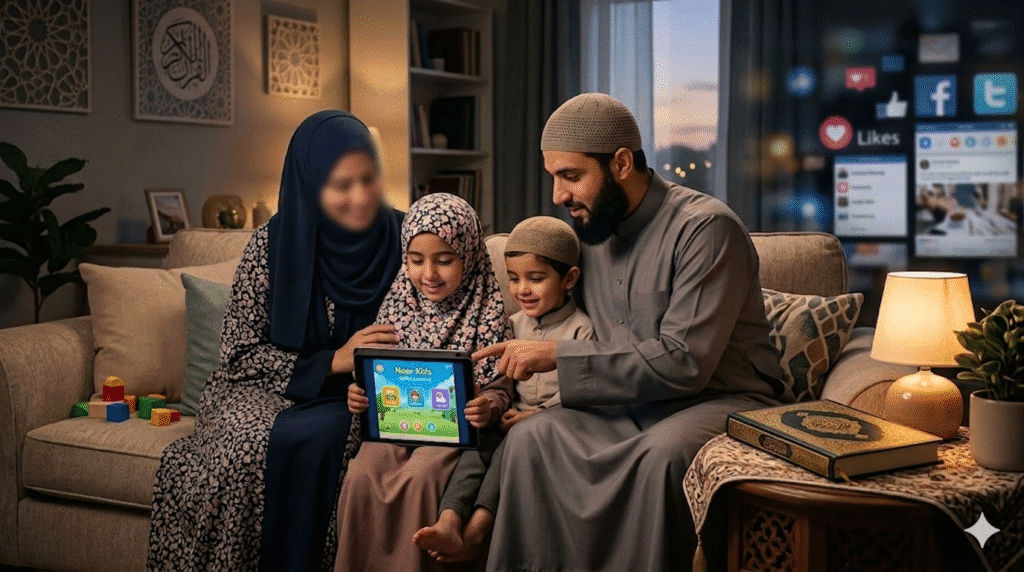
In today’s fast-moving digital world, parenting has become more challenging than ever before. Children and teenagers spend hours on smartphones, tablets, and social media platforms, where they are constantly exposed to both positive and negative influences. For Muslim parents, the responsibility is even greater because Islamic parenting is not only about raising educated children but also about nurturing strong Islamic values, good character, and emotional well-being.
The rise of social media has created new concerns such as cyberbullying, inappropriate content, screen addiction, anxiety, depression, and the weakening of family relationships. This is why Islamic parenting in the digital age requires wisdom, balance, and guidance rooted in the Quran and Sunnah.
Parents who want to raise confident, morally strong, and spiritually connected Muslim children should focus on Islamic education alongside modern parenting strategies. Platforms like Al Furqan Academy provide valuable online Quran learning programs that help children stay connected with Islam while navigating the digital world responsibly.
Social media can impact a child’s mental, emotional, and spiritual development. Many children compare themselves to unrealistic lifestyles shown online, leading to low self-esteem and insecurity. Exposure to toxic content, bad language, violence, and un-Islamic behavior can slowly influence a child’s mindset and habits.
Some common dangers of social media include:
Islam teaches Muslims to protect their hearts, minds, and actions from harmful influences. Parents must therefore actively guide children instead of completely relying on technology.
Islam provides timeless parenting guidance that remains relevant even in the modern digital age. The Prophet Muhammad ﷺ emphasized kindness, education, discipline, and strong moral character when raising children.
The best way to protect children from social media negativity is by strengthening their Islamic identity. A child who understands Islamic values is more likely to avoid harmful online behavior.
Teach children:
Enrolling children in online Quran classes through Al Furqan Academy can help them stay spiritually connected while learning from qualified Islamic teachers.
You can also explore programs related to Quran memorization and Islamic studies to create a stronger religious environment at home.
One of the most effective digital parenting strategies is controlling screen time. Excessive use of social media can damage sleep patterns, academic performance, and emotional health.
Parents should:
Islam encourages balance in every aspect of life. Children should understand that technology is a tool, not the center of life.
Children need proper guidance on how to behave online according to Islamic teachings. Explain that Allah watches every action, whether online or offline.
Teach them:
This concept aligns with Islamic teachings about protecting one’s tongue, character, and intentions.
Many parents make the mistake of only imposing restrictions without understanding their children’s online experiences. Kids should feel comfortable discussing problems related to social media, cyberbullying, or peer pressure.
Spend quality time with your children and ask:
When children trust their parents, they are more likely to seek help before problems become serious.
Children learn more from actions than words. Parents who constantly use phones and social media excessively may unknowingly encourage similar habits.
Practice healthy digital behavior by:
A positive Islamic environment can naturally reduce children’s attraction toward harmful online content.
One of the best ways to counter social media negativity is by keeping children engaged in beneficial Islamic learning. Online Quran academies have become highly effective in helping kids learn Islam safely from home.
Al Furqan Academy offers structured Quran classes for kids and adults, helping families maintain strong Islamic values in today’s digital age.
Benefits of online Islamic education include:
Parents looking to strengthen their child’s faith should prioritize consistent Quran learning alongside school education.
Parents should stay alert to behavioral changes that may indicate digital stress or harmful online influence.
Warning signs include:
If these signs appear, parents should calmly intervene and gradually create healthier habits.
Here are some practical Islamic parenting tips for the digital age:
Organize:
Install safe browsing tools and monitor apps to reduce exposure to harmful content.
Healthy friendships and community involvement reduce social media dependency.
Praise children for:
Positive reinforcement works better than constant punishment.
Technology itself is not harmful; the problem arises when it is used without discipline or Islamic guidance. Muslim parents should teach children how to use technology productively for education, communication, and Islamic learning.
Children can use digital platforms to:
By balancing modern technology with Islamic teachings, parents can raise children who are both digitally smart and spiritually strong.
Islamic parenting in the digital age requires patience, awareness, and active involvement. Social media negativity can affect children emotionally, mentally, and spiritually if parents do not provide proper guidance. However, with strong Islamic values, healthy communication, balanced screen time, and Quran education, parents can protect their children from harmful online influences.
The key is not to completely remove technology but to teach children how to use it responsibly according to Islamic principles. Investing in Islamic education through trusted platforms like Al Furqan Academy can help families build a strong spiritual foundation for their children.
As digital challenges continue to grow, Muslim parents must remain proactive in guiding the next generation toward faith, positivity, and good character.